


Backgammon Club
3.3150.00 Reviews
App Specs
- Version
- 2.2.3
- Updated On
- License
- Free
- Downloads
- 100,000+
- Developer
- GameClubUSA.com
- Categories
- Board
- Platform
- Android
Screenshots
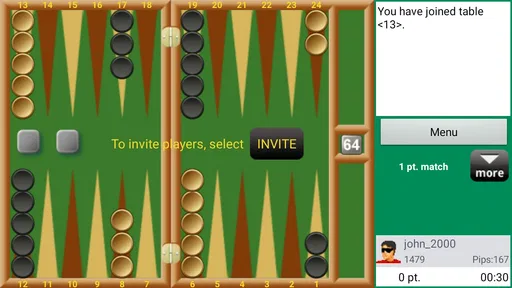
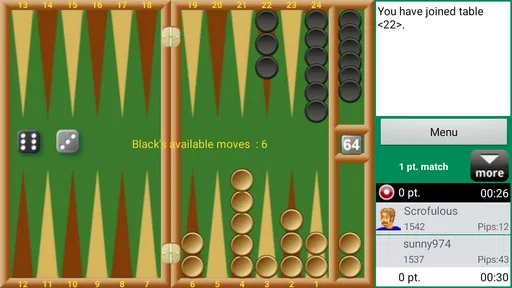
 Analysis by AppCompare
I enjoy backgammon most when a game gives me enough structure to stay focused without turning every move into a long commitment. Backgammon Club takes that familiar board-game idea and puts it on Android phones and tablets, with online matches, games, and tournaments available without an upfront purchase. After spending time with it, I see it as a straightforward choice for players who want regular backgammon sessions rather than a large collection of unrelated modes.
The important thing is to approach it with the right expectations. This is a board game built around reading probabilities, protecting pieces, creating blocks, and deciding when to take a risk. It is not designed to overwhelm you with a campaign or a deep role-playing progression system. Its appeal comes from the repeated decision-making of backgammon and the possibility of facing other players online. For me, that makes the quality of the match itself more important than flashy presentation or a long list of unlocks.
What the first sessions feel like
My first useful goal in Backgammon Club was not winning every match. It was learning how the app presents the basic rhythm of a game: roll, choose a legal move, assess the board, and prepare for the opponent’s reply. That sounds obvious to an experienced player, but it matters on a mobile screen, where quick taps can make a familiar move feel less deliberate than it does with a physical board.
New players should begin by treating each match as practice in position reading. I found it more productive to watch how exposed pieces, blocked points, and the race toward home changed the next decision. Trying to chase a perfect result immediately can make the early experience frustrating, especially because dice introduce uncertainty even when the strategic choice is sound.
The online focus gives the opening sessions a clear purpose. Instead of playing only against a predictable computer routine, you can use matches to test whether your plans hold up against another person’s choices. That creates an early goal that feels more meaningful than simply clearing a tutorial: build enough confidence to make moves without second-guessing every tap.
There is also a practical benefit to the phone-and-tablet format. A short session can fit into a break, a commute, or the few minutes before an appointment, while a tablet gives the board more breathing room. I would still recommend a stable connection and a quiet moment when possible. Backgammon is turn-based, but rushing because you are distracted can cost you more than an unlucky roll.
Small decisions matter more than dramatic rewards
One of the more interesting aspects of the early game is that progress is felt through better decisions rather than through a constant stream of visible rewards. I noticed improvement when I stopped treating every available hit as automatically correct and started asking what the board would look like afterward. That kind of learning is easy to miss if you expect a conventional game to show progress through levels, equipment, or character upgrades.
Worth Reading Before You Choose

EA SPORTS FC Mobile 26 Is a Bigger Football Game, but It Takes Time

Flipboard Shows What News Apps Must Do Beyond the Feed

Switching to Android Auto Means Rethinking Your Driving Routine

Google Calendar Makes a Crowded Week Easier to Manage

Ludo King Makes the Most of the Minutes Between Plans

Baby Panda World Brings Quick Play to Modern Phones, but Its Game Library Feels Busy
For a beginner, a useful personal routine is to identify one mistake after each match. Perhaps I left a blot exposed while racing, broke a useful point too soon, or played too aggressively when safety mattered more. Focusing on a single lesson keeps the game from becoming a vague cycle of wins and losses. It also gives the next match a specific purpose.
Experienced backgammon players may find the early stage familiar rather than exciting. The app’s strength is accessibility and repeat play, not a dramatic introduction. If you already understand anchors, primes, bearing off, and the basic trade-off between racing and contact, you will probably move quickly past the learning stage and judge the app mainly by its online experience and pacing.
How progress is communicated during play
Backgammon Club does not need a complicated progression ladder to make a session feel worthwhile. The clearest progress signal is the match result, followed by the quality of the choices that led there. A narrow loss can be more instructive than an easy win, particularly when it reveals a decision that can be handled differently next time.
I like this kind of progress because it remains tied to the actual board. There is no need to pretend that a cosmetic unlock makes me a better player. The meaningful improvement comes from recognizing patterns earlier, counting the race more accurately, and understanding when to preserve flexibility instead of committing pieces too soon.
That said, this approach can feel understated if you prefer games that constantly celebrate advancement. Someone looking for a strong sense of accumulation may find ordinary matches less rewarding after the initial novelty fades. The app’s structure asks you to supply some of your own motivation. Setting a goal such as “play more patiently” or “avoid unnecessary blots” helps create a personal progression track where the game may not provide a dramatic one.
Tournaments add another reason to keep returning. They change the emotional shape of play because a single move can feel more important when it contributes to a broader competitive run. I would save tournament sessions for times when I can concentrate, rather than treating them as background entertainment. The format is better suited to deliberate play than to tapping through a match while multitasking.
Using matches as a practical training loop
A useful workflow is to separate casual play from focused practice. In a relaxed match, I might simply enjoy the back-and-forth and accept that some decisions will be instinctive. In a more deliberate session, I would pause before important moves and compare two ideas: the safer move that protects the position and the aggressive move that creates immediate pressure.
This is especially helpful in the middle game, where the best choice is rarely obvious from the roll alone. The app becomes more satisfying when I use each turn to ask what I am trying to accomplish: build a block, escape a vulnerable checker, improve my home board, or preserve options for the next roll. That mindset turns a simple mobile match into a compact strategy exercise.
Players who want to improve should also resist judging their skill from a short run of results. Dice can make a session feel brilliant or hopeless, but the longer-term signal is whether your decisions remain sensible when the roll is inconvenient. Backgammon Club works well for that kind of repeated practice because starting another game is easy and the core rules remain consistent.
Difficulty, fairness, and the changing pace of a match
The difficulty curve in backgammon is unusual because it comes from the opponent and the position, not from a sequence of clearly labeled stages. A beginner may understand the rules quickly yet still struggle to choose between several legal moves. A stronger opponent can expose weaknesses that were invisible in casual play, while an unlucky roll can make a good position suddenly uncomfortable.
That uncertainty is part of the appeal, but it also creates the main emotional challenge. Losing does not always mean I played badly, and winning does not always prove that every decision was correct. I found it healthier to evaluate the position before the dice changed it, then consider whether my choice gave me the best practical chance. This keeps the game strategic without pretending that chance can be removed.
The pacing is generally best when I allow the board to develop. Early moves can look quiet, but they establish the structure that determines later options. The middle portion usually demands the most attention because contact, blocks, and exposed pieces make each decision more consequential. The closing race can feel faster, yet counting accurately still matters; a careless assumption about the distance home can throw away an otherwise strong position.
For casual players, that changing pace makes the game easy to revisit. You can enjoy a quick match without needing a large time investment, but the decisions still have enough depth to reward concentration. For highly competitive players, the same simplicity may feel limiting if they want extensive analysis tools, a dense ranking ecosystem, or a specialized training environment. In that case, a dedicated backgammon platform with more advanced study features may be a better fit.
Where the mobile format helps and where it gets in the way
On a phone, the compact board makes the game convenient but places more responsibility on careful input. I would tap deliberately when several checkers are close together or when a move involves a hit and a second destination. A quick finger can turn a correct plan into an accidental selection, and the smaller display leaves less room for visual checking than a physical board.
A tablet is the more comfortable choice for longer sessions because the board is easier to inspect at a glance. The larger format also makes it simpler to count points and compare both sides of the position. If you mainly play on a smaller phone, I would keep sessions focused and avoid playing when tired or distracted, especially during tournaments.
The online format also changes the social pressure. Even without a long campaign, another person’s turn creates a natural reason to stay engaged. That can make matches feel more alive than solitary practice, but it may be less appealing if you want a completely relaxed, pause-anytime experience. Players who prefer to experiment freely may be happier with a local or offline alternative, while those who want human unpredictability will find the online emphasis more compelling.
What keeps players returning
The retention loop here is simple: play a match, learn from the result, and try again with a better plan. Tournaments strengthen that loop by giving certain sessions a clearer competitive purpose. I think this is more sustainable for backgammon fans than a progression system that adds artificial chores, because the board itself remains the reason to return.
Still, the simplicity can work against the app after the first burst of interest. If you need frequent new content, a story, collectibles, or a large set of changing objectives, this will probably feel too narrow. The game relies on the replay value of backgammon, and that value depends heavily on whether you enjoy studying positions and facing varied decisions.
In-app purchases range from a few dollars to amounts approaching twenty dollars per item, so I would pay attention before confirming any optional purchase. The game is free to start, which makes it easy to test the basic experience first. My advice is to decide whether the match flow, online competition, and tournament structure genuinely suit you before spending anything. A free download is useful here because backgammon’s appeal is personal: some players can replay it for years, while others need more variety.
The Teen content rating is another reason parents and younger players should check whether the app fits their household expectations. I would not treat the rating as a substitute for supervision or account awareness. Anyone sharing a device should also be clear about who is making purchases, particularly when a free game offers optional items.
Who will get the most from it
I would recommend Backgammon Club to someone who already likes the physical board game and wants a convenient way to find online matches. It is also a reasonable starting point for a curious beginner who is willing to learn through repetition rather than expecting a heavily guided course. The combination of ordinary matches and tournaments gives both casual and competitive players a reason to return.
A realistic everyday use case would be a player who has ten or fifteen quiet minutes after lunch. Instead of setting up a board, they can open the game on an Android phone, play a focused session, and leave with one decision to review mentally. On a tablet at home, the same player could settle into longer tournament play and inspect the board more comfortably. That flexibility is one of the strongest reasons to choose a mobile version.
I would skip it if your priority is a broad board-game collection, a rich solo campaign, or a game that rewards you with constant unlocks. I would also look elsewhere if you need extensive analytics, detailed lessons, or a highly specialized competitive environment. A physical board remains better for face-to-face play, and an advanced backgammon service may be better for serious study.
Compatibility, background, and overall value
Backgammon Club is developed by GameClubUSA.com and is available free of charge. It supports Android version 7.0 and later, which makes it accessible on many older compatible devices as well as newer phones and tablets. The app’s current version is 2.2.3, so I would still check that your device meets the operating-system requirement before trying to install it.
The game has been available since September 23, 2016, and its audience has grown to over one hundred thousand installs. Its average rating is around 3.3 from roughly two thousand ratings, with about one hundred fifty written reviews. I read those figures as a sign of a functional but not universally loved experience: enough players find value in it, while the middling score suggests that expectations about polish, matchmaking, or pacing may vary.
Those numbers should not decide the purchase by themselves. Backgammon is a specialized category, and a player who wants online tournaments may value the app more than someone who only wants a polished offline board. The free entry point makes that distinction easy to test. I would install it for the core matches first, then judge whether the presentation and competitive rhythm are comfortable enough for regular use.
Compared with playing on a physical board, the app wins on convenience and access to online opponents, but loses some of the tactile pleasure and face-to-face conversation. Compared with a general board-game collection, it offers more attention to backgammon but far less variety. Compared with a serious training tool, it is more approachable but likely less useful for players who want every move analyzed in depth.
My verdict on the progression and pacing
Backgammon Club succeeds when progress means becoming a more observant backgammon player. Its early goals are easy to understand, its matches provide immediate feedback, and tournaments give experienced users a stronger reason to concentrate. The pacing works because a game can be brief while still containing several layers of decision-making.
The trade-off is that the app does not appear to depend on a dramatic unlock structure to hold attention. That is good news for players who want the board to remain central, but it is a weakness for anyone who needs constant novelty. The retention pressure comes from the next match and the desire to make a better choice, not from a large collection of rewards.
For me, that makes it a worthwhile free option for Android backgammon fans who want online play on a phone or tablet. I would approach the optional purchases carefully, use casual matches to build confidence, and reserve tournaments for sessions where I can focus. If you enjoy the discipline of learning from repeated positions, this compact game has enough substance to stay interesting. If you need a campaign, extensive instruction, or a broader range of board games, another option will suit you better.
Pros
- Easy-to-learn rules make it suitable for casual players.
- Online matches provide a competitive challenge against real opponents.
- Multiple game modes help keep sessions varied and engaging.
- The classic board design is clear and easy to read on mobile screens.
- Short matches are convenient for playing during quick breaks.
Cons
- A stable internet connection may be required for online matches.
- Matchmaking quality can vary depending on the available player pool.
- Random dice rolls may feel frustrating during closely fought games.
- Some features or content may be limited without in-app purchases.
- New players may find experienced opponents difficult to beat.
FAQs for Backgammon Club
What is Backgammon Club, and how does the game work?
Backgammon Club is a digital version of the classic board game in which two players move their checkers around the board and try to bear them off before their opponent. Matches combine strategy, probability, and tactical decisions based on dice rolls. The app is designed for both casual players and users who want to improve through repeated games and competitive challenges.
Can I play Backgammon Club offline or without creating an account?
Backgammon Club may offer practice or single-player features that can be used without a constant internet connection, although online matches and some social functions generally require access to the internet. Account requirements can vary depending on the version and platform. Before downloading, check the app’s current store description to confirm whether guest play, offline mode, or account registration is supported.
Does Backgammon Club support multiplayer games?
Multiplayer is one of the main reasons to use Backgammon Club. Depending on the available version, you may be able to compete against other players online, challenge friends, or play against computer-controlled opponents. Online play normally depends on a stable connection, and matchmaking, rankings, tournaments, or chat features may differ according to the app version and your region.
Is Backgammon Club suitable for beginners?
Yes, Backgammon Club can be suitable for beginners because the basic rules are easy to understand, while the strategic possibilities become more complex with experience. New players should take time to learn movement, hitting, entering checkers from the bar, and bearing off. Practice games against the computer can be especially useful before joining competitive online matches.
Is Backgammon Club free to download, and does it include in-app purchases?
Backgammon Club may be available as a free download, but the exact business model depends on the Android or iOS version. Some editions can include advertisements, optional purchases, premium features, virtual currency, or subscription-related content. It is worth reviewing the store listing and purchase information before installing, particularly if the app will be used by children or on a shared device.


